
Key Takeaways
- Compression socks with targeted zones actively reduce heel pain from plantar fasciitis by improving circulation and stabilizing the plantar fascia.
- A compression level of 15-30 mmHg covers the range from all-day comfort to clinically meaningful symptom management – the right choice depends on activity and severity.
- Compression socks work best alongside stretching, orthotics, and supportive footwear – not as a standalone fix.
- Heel cushioning, arch support, and graduated compression are the three features most worth prioritizing when shopping for plantar fasciitis socks.
- Keep reading to understand exactly when and how to wear compression socks for the greatest benefit – including what podiatrists say about overnight use.
Heel Pain That Strikes Every Morning Has a Targeted Fix
That first step out of bed – the one that sends a sharp, stabbing pain through the heel – is something millions of people know too well. For most of them, plantar fasciitis is the culprit. It is the most common cause of heel pain in the U.S., affecting more than 2 million people annually, according to the Cleveland Clinic. The frustrating part is that the pain often eases after a few minutes of walking, only to return with force after long periods on your feet.
There is no single magic fix, but one surprisingly effective tool is already part of getting dressed in the morning: the right pair of socks. Compression socks engineered with targeted support zones address the symptomatic mechanics of plantar fasciitis pain – reducing strain and inflammation – and the evidence behind them is grounded in real podiatric science. Mason Workwear’s range of bamboo work socks is one example of how thoughtful sock construction can make a meaningful difference for people on their feet all day.
What Plantar Fasciitis Actually Does to Your Heel
The plantar fascia is a thick, fibrous band running from the heel bone to the toes. It functions like a rubber band stretched along the bottom of the foot – absorbing impact, supporting the arch, and enabling normal walking mechanics. When it is overused or stretched too far, it becomes inflamed, and that inflammation is what causes the pain.
Why Morning Pain Is So Sharp
During sleep or extended rest, the plantar fascia tightens and shortens. The moment weight is placed on the foot again, that tissue receives a sudden, forceful stretch – which triggers the intense first-step pain. After a few minutes of movement, the tissue loosens and the pain tends to dull. This pattern is one of the most recognizable hallmarks of plantar fasciitis.
Who Gets It Most
Anyone can develop plantar fasciitis, but certain groups face higher risk:
- People who stand or walk on hard surfaces for work – warehouse floors, concrete, asphalt
- Runners and athletes who increase their training load quickly
- Those with flat feet or high arches
- Individuals who have recently gained weight or experienced rapid weight changes
- People who wear unsupportive footwear such as flip-flops or flat sneakers
The Cleveland Clinic estimates roughly 1 in 10 people will develop plantar fasciitis at some point in their lives – making it far more common than most realize.
How Compression Zones Help Manage Symptoms and Support Healing
Compression socks designed for plantar fasciitis do not squeeze the foot uniformly. The best ones feature graduated compression – firmest at the foot and ankle, easing as it moves up the calf. This graduated design is functional, not cosmetic, and podiatrists point to two key mechanisms that explain why it works.
Reducing Inflammation by Boosting Circulation
Inflammation in the plantar fascia is partly driven by the accumulation of fluid and metabolic waste products in the tissue. Compression promotes venous return – pushing blood back up the leg toward the heart – which reduces swelling and clears the metabolic waste products that slow tissue repair. This is why many people notice reduced morning pain when they have been consistent with compression socks: increased blood flow activates the tissue and limits the overnight buildup of inflammatory fluid.
Light Stabilizing Effect on the Plantar Fascia
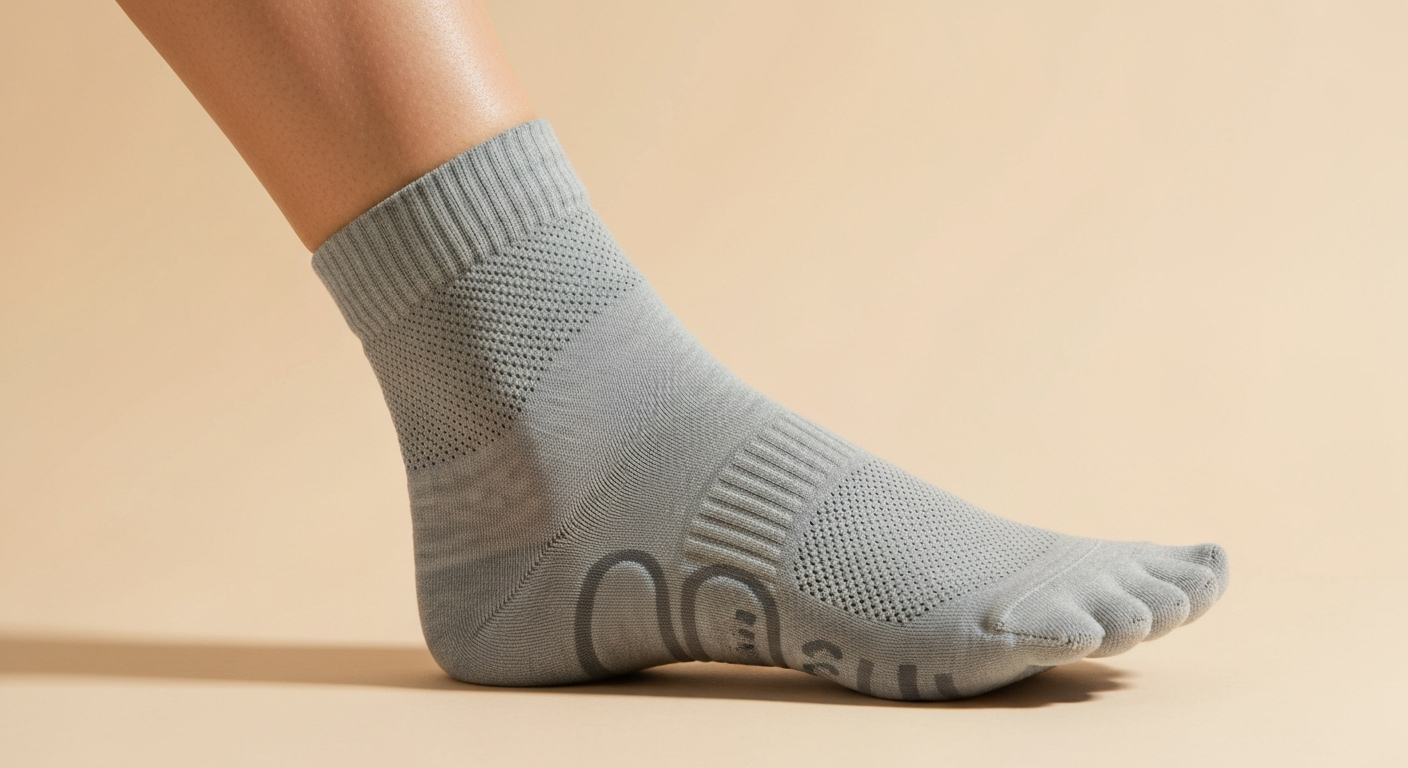
Targeted compression in the arch and heel does more than improve circulation – it also acts as a gentle brace. Properly designed socks can help maintain foot alignment, reduce strain on the plantar fascia, and enhance comfort during daily activities. That stabilizing effect reduces the micro-tearing that perpetuates chronic inflammation in the fascia, giving the tissue a better environment to heal.
What to Look for in a Plantar Fasciitis Sock
Not all compression socks are created equal. Three features separate a sock that genuinely helps from one that just feels snug.
Compression Level: 15-30 mmHg Explained
Compression is measured in millimeters of mercury (mmHg). For plantar fasciitis:
- 15-20 mmHg – Suitable for all-day wear, mild swelling, and light activity. Comfortable enough for most people to wear from morning to evening without fatigue.
- 20-30 mmHg – The range most podiatrists recommend for meaningful symptom management. Some research suggests levels above 20 mmHg are particularly effective, especially when combined with orthotics or physical therapy.
The American Podiatric Medical Association (APMA) Seal of Acceptance appears on select compression socks, indicating they have been evaluated for extended podiatric use – a useful quality signal when shopping.
Arch Support Works Best Alongside Orthotics
Many plantar fasciitis socks include built-in arch support bands. These help, but they work best as a complement to custom or over-the-counter orthotics – not a replacement. Compression socks are very effective in managing symptoms, especially when used alongside orthotics, proper footwear, and stretching. The sock stabilizes; the orthotic corrects the underlying mechanical issue.
Heel Cushioning for Impact Relief
Extra padding at the heel absorbs ground-contact forces before they travel up through the inflamed fascia. This is particularly important for people who spend time on hard floors – the heel takes the first and hardest impact with each step. Look for socks with reinforced heel zones, not just general cushioning across the sole.
When and How to Wear Compression Socks
During Activity: Proactive Prevention
Wearing compression socks during activities that trigger plantar fasciitis pain is one of the most practical applications. They work proactively – reducing fluid accumulation during activity, limiting post-activity arch tightness and fatigue, and providing a stabilizing effect on the fascia throughout movement. Podiatrists often recommend wearing plantar fasciitis socks daily, especially during long periods of standing or walking.
Overnight Use: Lower Compression and Provider Guidance Advised
Some people wear compression socks overnight to minimize the fascia tightening that causes sharp morning pain. Lower compression levels are generally more appropriate for overnight use, and checking with a healthcare provider first is advisable – particularly for anyone with circulation concerns. Individuals with poor circulation should avoid compression socks entirely without medical guidance.
Compression Socks Work Best as Part of a Plan
Compression socks are not a cure for plantar fasciitis. The Cleveland Clinic’s treatment guidance includes rest, icing, NSAIDs, orthotics, stretching, and in persistent cases, corticosteroid injections or physical therapy. Compression socks fit into that plan as a daily, low-effort tool that provides consistent support without requiring any downtime or prescription. They reduce the friction between daily activity and recovery – but stretching, footwear choices, and where appropriate, professional care, still matter.
The Right Compression Sock Can Genuinely Change How Your Feet Feel Each Day
For anyone managing plantar fasciitis, the difference between a generic sock and one built with compression zones, heel cushioning, and arch support is real. The right sock makes feet more comfortable and actively participates in reducing inflammation, supporting tissue healing, and making each step less of a battle.
The goal is consistency: wearing the right compression level during activities that strain the plantar fascia, pairing socks with proper footwear and orthotics, and giving the body the circulatory support it needs to keep inflammation in check. That combination, applied daily, is where the real results show up.
For quality socks built with hardworking feet in mind, visit Mason Workwear – specialists in durable, comfort-focused work socks designed for people who spend their days on their feet.
Mason Workwear
support@masonclothing.com
+1 (760) 286-4266
5830 E 2nd St Casper WY 82609
United States
Wyoming (WY)
82609
United States


