
Originally Posted On: https://ikippahs.com/blogs/jewish-style/how-to-store-a-brocade-kippah-so-the-metallic-pattern-stays-bright
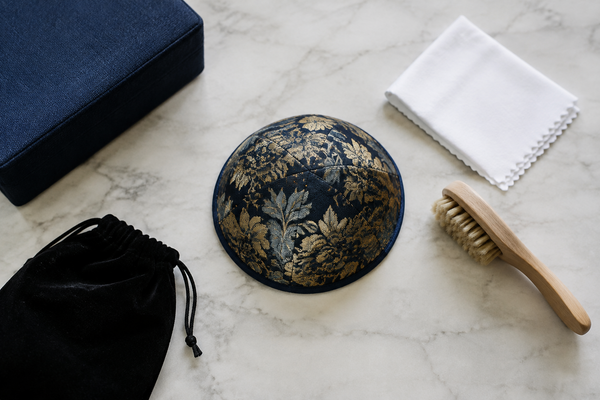
Quick Answer
A brocade kippah stays bright when you store it flat or lightly curved in a breathable cotton pouch or acid-free tissue, in a cool, dry, dark drawer. Keep it away from sunlight, humidity and direct contact with other fabrics, since moisture and friction dull the woven metallic thread.
A brocade kippah is a skullcap made from fabric with raised decorative patterns woven into the cloth, often with metallic thread, and that thread is what loses its shine first when the kippah is stored badly. For men who save a dressy piece for Shabbat and the High Holidays, that matters, because a kippah sits in a drawer for most of the week.
Metallic weave dulls from friction, trapped moisture and long contact with other fabrics. Brocade doesn't forgive a crushed pocket or a damp tote bag the way plain cotton does. After 15 years of sourcing fabric, I can tell you the damage is almost always done in storage, not on the head.
The fix is cheap and takes about two minutes. Keep it flat, dry and apart from rougher fabrics, and the pattern will look the same next Rosh Hashanah as it did the day you bought it.
What Is the Best Way to Store a Brocade Kippah?
The best way to store a brocade kippah is flat or loosely domed, in a dry drawer or box, away from sunlight and without folding it along the seams. That keeps the raised metallic pattern from creasing, rubbing, or tarnishing.
What Is a Brocade Kippah and Why Does the Metallic Thread Need Special Storage?
A Brocade kippah is a skullcap made from fabric with raised decorative patterns woven directly into the cloth, rather than printed or embroidered on top, as iKippahs describes it. Many versions carry metallic or glitter thread, and those floating threads sit on the surface of the weave.
Metallic thread snags, flattens, and dulls faster than plain cotton or wool. Pressure, friction, and damp air are the three usual culprits.
-
Folding: A hard crease crushes the raised weave and leaves a dull line that rarely relaxes.
-
Stacking: Heavy items on top flatten the pattern and scratch the metallic fibers.
-
Moisture: Humid spaces speed up tarnish on metallic yarns.
-
Direct light: Sun fades dyed backgrounds and can leave the shine uneven.
Texture matters for neighbors in the drawer, too. A Personalized Velvet Yarmulke has a soft pile that can shed fibers onto brocade, so each type is better kept in its own compartment or pouch.
Formal pieces worn only on Shabbat and High Holidays sit unused for weeks, which makes storage more important than washing. A Personalized Formal Yarmulke made for a simcha deserves the same treatment, ideally in a small lined box.
Why Does a Brocade Kippah's Metallic Pattern Lose Its Shine?
A brocade kippah loses its shine mainly because the metallic threads tarnish, snag, or get crushed from skin oils, humidity, friction, and careless folding. Brocade is a fabric in which raised decorative patterns are woven directly into the cloth rather than printed on top, so the shine sits on tiny raised threads that damage easily.
Sweat and hair products are the first culprits. Oils from the scalp settle between the woven threads and dull the metallic yarn within a few Shabbat wears. Moisture does the rest, since damp air speeds up tarnish on lower-grade metallic fibers.
Pressure matters just as much. Tossing a kippah into a jacket pocket or stacking it under a siddur flattens the raised weave, and flattened threads reflect light poorly. That's why a Personalized Brocade kippah ordered for a wedding often looks tired after one season of loose storage.
Common causes of a faded pattern:
-
Skin oils and sweat that coat the metallic yarn
-
Humidity in closets, bathrooms, or car glove boxes
-
Crushing from folding or stacking
-
Rubbing against rough fabric or Velcro
Different fabrics age differently.
A Personalized Velvet kippah hides wear in its pile, while brocade shows every flaw. For a dressy shul look, a Formal kippah in velvet tolerates rougher handling, but brocade rewards careful storage with a brighter pattern for years.
Which Storage Options Work Best for Brocade Kippot?
A flat, breathable container lined with acid-free tissue is the best storage for a brocade kippah. It keeps the woven metallic threads from snagging, crushing, or tarnishing against other fabrics.
Brocade is a fabric where raised patterns are woven into the cloth rather than printed on top. That's why the metallic yarns catch on rough surfaces. A custom Brocade kippah sits best in a shallow box where nothing presses on the pattern.
Here's how the common options compare:
| Option | Best for | Watch out for |
|---|---|---|
| Shallow box with acid-free tissue | Long-term storage | Overstacking |
| Cotton or muslin pouch | Carrying to shul | Keys and coins inside |
| Drawer divider tray | Daily rotation | Contact with wool or velvet lint |
| Plastic bag | Nothing | Trapped moisture dulls metallics |
Separating fabrics matters too. A Velvet Yarmulke sheds fine fibers that cling to metallic weave, so give each its own compartment. A smooth Cream Yarmulke can share a tray, as long as nothing sits on top of the brocade.
-
Keep it dry. Humidity is what dulls metallic thread.
-
Keep it flat. Folding creases the raised pattern.
-
Keep it dark. Direct sun fades the dyed base fabric.
How Do You Store a Brocade Kippah Step by Step?
A brocade kippah stays bright when it's kept clean, dry, flat and out of direct light. Brocade is a fabric with raised patterns woven into the cloth, and metallic threads in that weave dull when they get damp, rubbed or sunlit.
-
Check that it's dry and clean. Brush off dust with a soft, dry cloth. Never fold away a kippah that feels even slightly damp.
-
Wrap it in acid-free tissue. Plain white tissue keeps metallic threads from touching each other or other fabrics.
-
Lay it flat in a hard box. A small rigid box stops crushing. Hanging clips and loose drawers bend the crown and scuff the pattern.
-
Keep it away from light and heat. A closet shelf works better than a windowsill or car glove box.
-
Store it apart from velvet and leather. Rough textures snag metallic thread, and dyes can transfer.
In practice, a single box with one tissue-wrapped kippah per compartment handles a Shabbat rotation well. Anyone who owns several for holidays should label each box by occasion.
Shoppers building that rotation can browse a Brocade Yarmulke collection for patterns that suit the same storage routine. A Personalized Raw Silk kippah follows the same dry, flat, tissue-wrapped rules, so both can share one box.
What Storage Mistakes Dull or Damage a Brocade Kippah?
A brocade kippah loses its shine mainly through crushing, damp storage and contact with rough surfaces. Brocade is a fabric where raised decorative patterns are woven directly into the cloth, so metallic threads sit on top and snag or flatten easily.
Can You Fold, Stack or Clip a Brocade Kippah Without Harm?
No. A brocade kippah should lie flat or rest in a shallow box, because folding creases the metallic threads and heavy stacking flattens the raised pattern. Clips are the worst offender, since a bobby pin or clip can pull threads and leave a permanent dent.
-
Store flat, pattern side up, with acid-free tissue between pieces.
-
Keep stacks to two or three kippot at most.
-
Remove clips before putting the kippah away.
A Satin kippah — a brocade piece should never share a pile, because the slick satin slides and the metallic weave catches. Anyone ordering a custom Brocade Yarmulke for a wedding should ask for a box or sleeve for each one. For a smooth, quiet alternative, a Satin kippah suits separate storage.
How Should You Handle Stains, Moisture and Travel Before Storing?
A brocade kippah should be dry and spot-cleaned before storage, and it should travel in a rigid container. Dab a fresh stain with a barely damp white cloth, never rub, and let the kippah air-dry flat away from heat.
Damp fabric breeds mildew and can tarnish metallic threads. Skip plastic bags for long-term storage, and use a breathable cotton pouch instead. For travel, a small hard case keeps the brim from bending and the pattern from scuffing against a tallit bag or a prayer book.
Key Takeaways
-
Store a brocade kippah flat or lightly domed in a rigid box or a lined pouch, because crushing the cloth flattens the raised woven pattern and dulls the metallic thread.
-
Keep every brocade kippah away from sunlight, heat and damp air, since those three conditions tarnish and dim metallic yarn faster than anything else.
-
Separate brocade kippot from each other with acid-free tissue or soft cloth, so the metallic threads don't snag or rub against neighboring fabric.
-
Avoid clipping a brocade kippah repeatedly in the same spot, because pressure from a clip pulls at the woven pattern and leaves a visible mark over time.
-
Let a brocade kippah dry completely and blot any spill gently before it goes into storage, since trapped moisture is what causes tarnish and musty smells.
-
Pack a brocade kippah in a hard case for travel instead of a pocket or bag, so it keeps its shape and the metallic pattern stays bright for Shabbat and the High Holidays.
Frequently Asked Questions
What is a brocade kippah?
A brocade kippah is a head covering made from fabric with raised decorative patterns woven directly into the cloth. The pattern is part of the weave, not printed or embroidered on top, which gives the kippah a rich, textured look that suits Shabbat — holidays.
Is a brocade kippah appropriate for shul on Shabbat and High Holidays?
Yes, a brocade kippah works well for Shabbat and High Holidays. Its woven texture reads as dressy and festive. Choose a subdued tone like ivory, black, or deep navy if your community prefers a conservative look.
How is brocade different from velvet or suede for a kippah?
Brocade shows a woven, raised pattern, while velvet is soft and plain and suede has a matte, napped finish. Velvet is the classic choice for understated formality. Brocade suits you if you want visible detail without a printed design.
Can brocade kippot be personalized for a wedding?
Yes, brocade kippot can be personalized for weddings and other events. Many makers offer custom imprints or matched colors for bulk orders. Ask about turnaround early, since event dates rarely move.
Does a brocade kippah stay on the head well?
A brocade kippah stays put when it fits your head size and has a well-made panel construction. Fabric texture adds a little grip. If it still slides, a small kippah clip solves the problem.
How do you care for a brocade kippah?
A brocade kippah should be spot cleaned gently and air-dried, not machine washed. Heat and harsh scrubbing can flatten or snag the woven pattern. Store it flat so it keeps its shape.
What size brocade kippah should I buy?
Most adult men wear a kippah around 6 to 7 inches in diameter, depending on head size and how far down you want it to sit. Measure the area the kippah will cover and compare it to the maker's size chart before ordering.
Are brocade kippot a good choice for party favors?
Brocade kippot make good favors for a Shabbat table or simcha because they look festive and guests can keep them. Order a few extra sizes so every guest finds a comfortable fit.
A brocade kippah keeps its shine when it sits flat, dry and away from light, and that habit costs nothing. Metallic thread tarnishes from air, moisture and rubbing, so the best storage is one that limits all three. A small acid-free box lined with soft tissue does the job for most owners.
Before the next Shabbat, empty the drawer where the kippah lives today and check for crushed edges, clips or loose coins. Then wrap the kippah in clean tissue, lay it face-up in a box, and put it on a shelf in a cool, dark closet. Repeat after every wear.


